Based on student experiences and professional French training at French As You Like It, most employers in France expect at least a B1 or B2 level of French depending on the industry and job role. For positions that interact with customers and office jobs, B2 in French is generally required, although some international companies and tech companies might accept English speakers with less than B2 French.
For better opportunities at work and easier daily life in France, B2 level is highly recommended.
What are the Levels of French Language?
The CEFR (Common European Framework of Reference for Languages) is a common scale for measuring proficiency in the French language in France.
| Fluency in French | Meaning | Job Opportunities in France |
| A1–A2 | Beginner | Seasonal or manual positions limited |
| B1 | Intermediate | Entry Level, Hospitality, Tourism |
| B2 | Upper-intermediate | Most professional, office work |
| C1–C2 | Advanced/Fluent | Teaching, journalism, management, law, healthcare |
The minimum level of French required to work in France
1. A1–A2 Level: Basic French
At level A1-A2 you can have simple conversations, introduce yourself and understand basic instructions. But this level is generally not enough for most jobs in France.
There are still opportunities in seasonal tourism, hospitality, some international startups, or entry-level positions. But even with beginner level French, it is hard to communicate in the workplace and in everyday life in France.
2. B1–B2 Level: Working French
B1 can communicate at a basic level at work, understand emails and meetings and handle simple tasks independently. This is the minimum level for many jobs in France.
B2 level is often required for professional jobs. It helps you to speak fluently, to participate in meetings, marketing, HR, finance, project management, to write emails and to work confidently in French-speaking environments.
3. C1–C2 Level: Advanced Professional Fluency
C1 – C2 french for high level professional roles such as law, teaching, government roles, Journalism and media, healthcare, HR, research, tech startups and multinational companies.
At this level you can communicate and work almost like a native French speaker in complex professional environments.

How Long Does It Take to Reach Working French?
A1–A2 is around 2–4 months. B1 takes 6-9 months. B2 takes 9-18 months. Timing depends on how much you study, how much language experience you get, and how much you practise every day. If you speak and you immerse you will improve faster.
How to prepare your French before working in France?
Practice conversation, Immersive Learning, and speak confidently in real life. This help you to speak natural French in everyday and work situations.
Take intensive Small Group French courses to improve faster. Add Business French Lessons and learn workplace vocabulary and how to communicate professionally.
Private French lessons in Paris & Online French lessons create a strong fluency. Professional French training and immersion helps to deal better with real job situations.
Learn French for Work in France with French As You Like It
If you are planning to move to France for work, French can make a huge difference in your professional success and daily life.
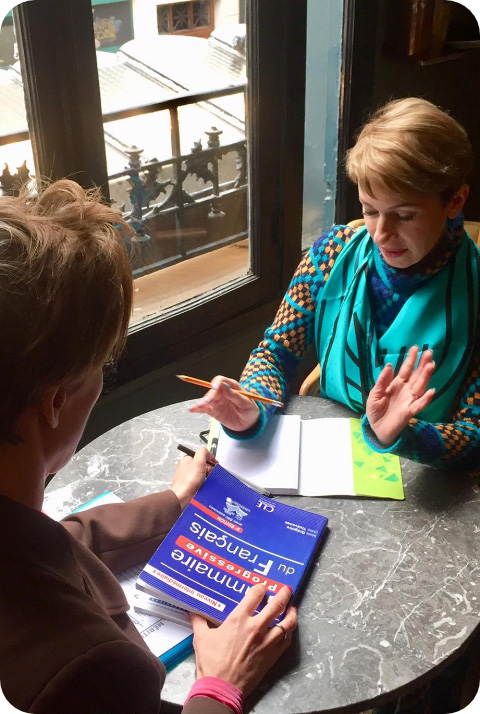
At French As You Like It, students from many countries have trained with experienced native French teachers through immersive and conversation-focused lessons in Paris and online.
The school specialises in:
- Intensive French courses
- Business French lessons
- Private French lessons in Paris
- Online French classes
- French immersion programmes
- Professional French communication training
The teaching approach focuses on real-life communication, workplace fluency, and confidence-building so students can use French naturally in professional environments, meetings, interviews, and everyday situations in France.
Key Takeaways
Most employers in France expect a minimum of B1 to B2 French. B2 is the safest and most common level for professional and office-based jobs.
In some international companies and tech jobs English may be an option, but the opportunities are limited and basic knowledge of French is still often an advantage.
Higher levels like C1 significantly boost career prospects, particularly in healthcare, education and senior roles. In general, the better your French, the more employment opportunities and workplace integration you will find in France.